Select your Language :

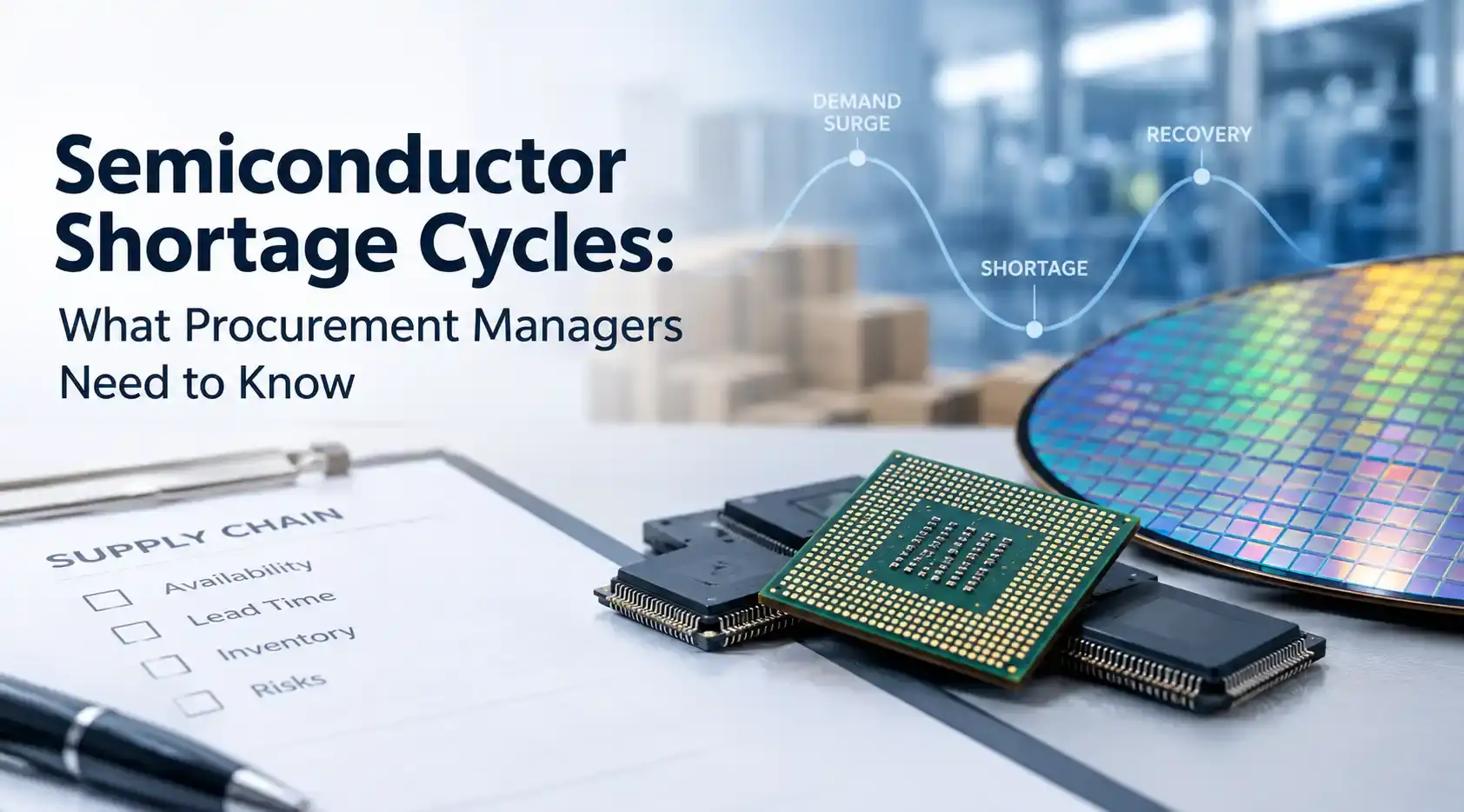
Chip shortages rarely start with anything dramatic. A small uptick in retail demand for phones, cars, or laptops moves through the supply chain and turns into a much bigger problem by the time it reaches the people who actually make the chips. That's the bullwhip effect, and it's why semiconductor shortages tend to be so costly and hard to predict. Foundries have limited production capacity, and expanding that capacity takes years, not months, so there's no fast way to catch up once demand outpaces supply.
Procurement teams that get caught without a plan end up scrambling: paying inflated spot-market prices, redesigning boards under pressure, or halting production lines altogether. A real chip shortage procurement strategy means building in multi-sourcing, long-term supplier contracts, flexible PCB designs, and better inventory management before a crisis hits, not after.
The market's scale makes this worth taking seriously. Depending on which 2026 forecast you check, the global semiconductor market is somewhere between roughly $975 billion and $1.5 trillion, with the wide range coming from an unexpectedly strong memory chip boom tied to AI infrastructure spending. Manufacturing is heavily concentrated in Asia, and Taiwan alone accounts for somewhere around 60 to 70 percent of global foundry output through TSMC, with total Taiwanese capacity running even higher. That concentration is exactly why a single earthquake, drought, or trade dispute can ripple through the entire global electronics industry.
Nearly every electronic product depends on semiconductors, which means a small shift in demand for one product category can create pressure across dozens of unrelated industries. Unlike many manufacturing inputs, chips don't respond well to just-in-time ordering. Forecasting has to happen years in advance, because the industries that rely most heavily on chips, automotive, consumer electronics, aerospace, and industrial machinery, can't absorb a sudden supply gap without real damage.
A shortage cycle typically starts with a demand spike and ends once the industry catches up, usually well after the original spike has passed. Understanding the mechanics behind that lag is what separates a reactive procurement team from a prepared one.
The pattern usually looks the same. A new product launches, demand spikes, and companies place large orders to secure enough chips for production. But chip manufacturers can't scale that fast. Meeting a sudden surge in orders often takes months, sometimes years, especially if it requires new fabrication capacity.
By the time that expanded capacity comes online, the original demand spike has often cooled off. The result is a glut: too many chips chasing lower demand, and prices drop. This is the silicon chip cycle in its entirety, and it's a big part of why chip pricing looks so volatile from the outside.
A modest increase in retail demand for electronics or EVs doesn't stay modest for long. As it moves upstream through the supply chain, each layer orders a bit more than it actually needs to protect against running short, and that compounding effect turns a small signal into a large one. Manufacturers respond by expanding production, which takes time they don't have. When the original demand finally normalizes, the industry is left holding excess inventory. This is the bullwhip effect, a well-documented pattern in supply chain management, not something unique to semiconductors. However, the long lead times in chip fabrication make it especially painful here.
Building new fabrication capacity is not a quick fix. A new fab requires specialized clean rooms, highly specific equipment, and trained labor, and getting all of that in place typically takes a couple of years before a single usable wafer comes off the line. Once a fab is running, producing finished semiconductor wafers still takes about 30 to 52 weeks, depending on the chip's complexity.
That combination, long build times plus long production times, means the industry structurally cannot respond quickly to a sudden spike in orders. Procurement teams that don't account for this lag when forecasting are the ones most likely to get caught short.
Because so much of global chip production sits in a small number of countries, a localized disruption can have an outsized global effect. Earthquakes, floods, droughts, fires at fabrication plants, and trade disputes have all triggered real shortages in the past. Trade wars add another layer: tariffs and export restrictions can choke off supply routes even when physical production capacity is fine.
If you're building a component sourcing plan around a single supplier region, working with an authorized distributor rather than depending on one manufacturer gives you somewhere to turn when one link in the chain gets disrupted. It's worth understanding the tradeoffs between a franchised distributor and an independent one before deciding which model fits your risk tolerance.
Looking at past shortages helps explain why these cycles keep repeating, and why they're rarely caused by just one factor.
In the late 1990s, chipmakers including Intel underinvested in manufacturing capacity while demand for PCs was climbing fast. At the same time, a wave of dot-com startups drove speculative investment that had little connection to actual revenue. When those companies collapsed in 2000, the mismatch between chip supply built for one demand curve and an economy that had shifted underneath it left the industry in disarray.
The March 2011 earthquake hit Japanese fabs that produced flash memory, silicon wafers, and microcontrollers. The disruption to raw material supply rippled outward fast, and automakers like Toyota felt it directly through auto chip shortages that slowed production for months afterward. It clearly showed how a natural disaster in one region can stall manufacturing on the other side of the world.
This stretch compounded multiple shocks in a row. The US-China trade war that began in 2018 included restrictions on companies like Huawei and SMIC, and it was already straining supply chains before COVID-19 hit. Pandemic lockdowns then triggered a surge in demand for laptops, routers, gaming consoles, and smartphones just as the same lockdowns constrained production capacity.
Then in 2021, drought conditions in Taiwan added another layer of pressure. Wafer fabrication requires large volumes of ultra-pure water for cleaning steps, so a serious drought year in a country responsible for most of the world's advanced chip production is a real operational risk, not just a headline.
Artificial intelligence has added a newer wrinkle since 2022, driving unprecedented demand for high-end memory and logic chips that's still reshaping supply allocation today.
None of the crises above were fully avoidable, but the impact on any individual company usually comes down to how well its procurement team had prepared.
Depending on a single supplier means a regional disruption can halt your entire chip supply. Pairing a manufacturer relationship with an authorized distributor gives you a fallback if one source goes down.
Multi-year capacity agreements can put you higher on a supplier's priority list during a shortage, reduce your exposure to price volatility, and lower your odds of hitting a stockout during peak demand periods.
Designing boards with built-in flexibility so you can swap in alternative or pin-compatible chips helps keep production moving if your primary component becomes unavailable.
Working with a distributor that can supply verified, authentic components makes it more practical to stockpile critical parts ahead of a shortage instead of scrambling for stock once one hits.
Using forecasting tools and historical trend data to anticipate demand shifts gives your team lead time to react before a shortage becomes urgent, rather than after.
Tracking manufacturer lifecycle notices, including NRND (not recommended for new design) status, gives you a warning window to stockpile or requalify a part before it's discontinued outright. This is one of the more overlooked strategies, but it's often the difference between an orderly transition and a scramble.
Letting a supplier manage your inventory through a VMI arrangement can reduce the risk of both overstocking and running short, since the supplier has direct visibility into your usage patterns.
Chip shortage cycles aren't random. They follow a fairly predictable pattern: a demand spike, a slow supply response, an eventual glut, and a repeat cycle when the next spike hits. Automotive, consumer electronics, aerospace, and industrial manufacturers all feel this because they all depend on the same constrained supply base. The procurement teams that come through these cycles in the best shape are usually the ones that built in multi-sourcing, long-term supplier relationships, flexible designs, and lifecycle tracking well before the next shortage started.
Chip shortages rarely start with anything dramatic. A small uptick in retail demand for phones, c
READ FULLDefense procurement is not like commercial buying. The margin for error is zero, the paper trail
READ FULLIndustrial Automation Electronics: Which ICs Matter for PLCs and SC
READ FULL